The Project I Kept Postponing (AI Didn't)
Years later, in hopes to remake the screensaver, asked my high-school programming teacher how to make things look 3D. He replied "How do you make three dimensions appear on a 2D screen?" — it was a nudge.

I'll never forget the first time I saw the classic Windows Starfield screensaver on my old man's computer at his work office: an endless sea of stars rushing at you at a hypnotic steady pace. Each one passing by within arms reach, tempting you to reach out and grab one. While viewing it, the voices around me faded to background noise – I was mesmerized. With my eyes locked in, my brain wrapping around how a machine is pulling this off, it set a lasting fascination in computation.
Years later, hoping to remake the screensaver, asked my high-school programming teacher how to make things look 3D. He replied "How do you make three dimensions appear on a 2D screen?" — it was a nudge. I tinkered, I struggled, and I ended up with a rendition that neither impressed him nor myself.

I tucked the project away, telling myself I'd do it right one day. Eventually I discovered that someone — Opanoid — had built a beautiful version in Objective-C for macOS.
Installed it and loved it. Then, as macOS evolved, it broke. I grabbed the source, dropped it in a GitHub repo, and told myself I'd port it to Swift when I had the time.
More years passed. The project graduated from personal goal to maybe I'll post it on Upwork.
Then came AI and thought I'd give Claude a try. Sure enough had it working at first try. I then stripped its extra flourishes that had drifted from the original classic feel, et voilà:
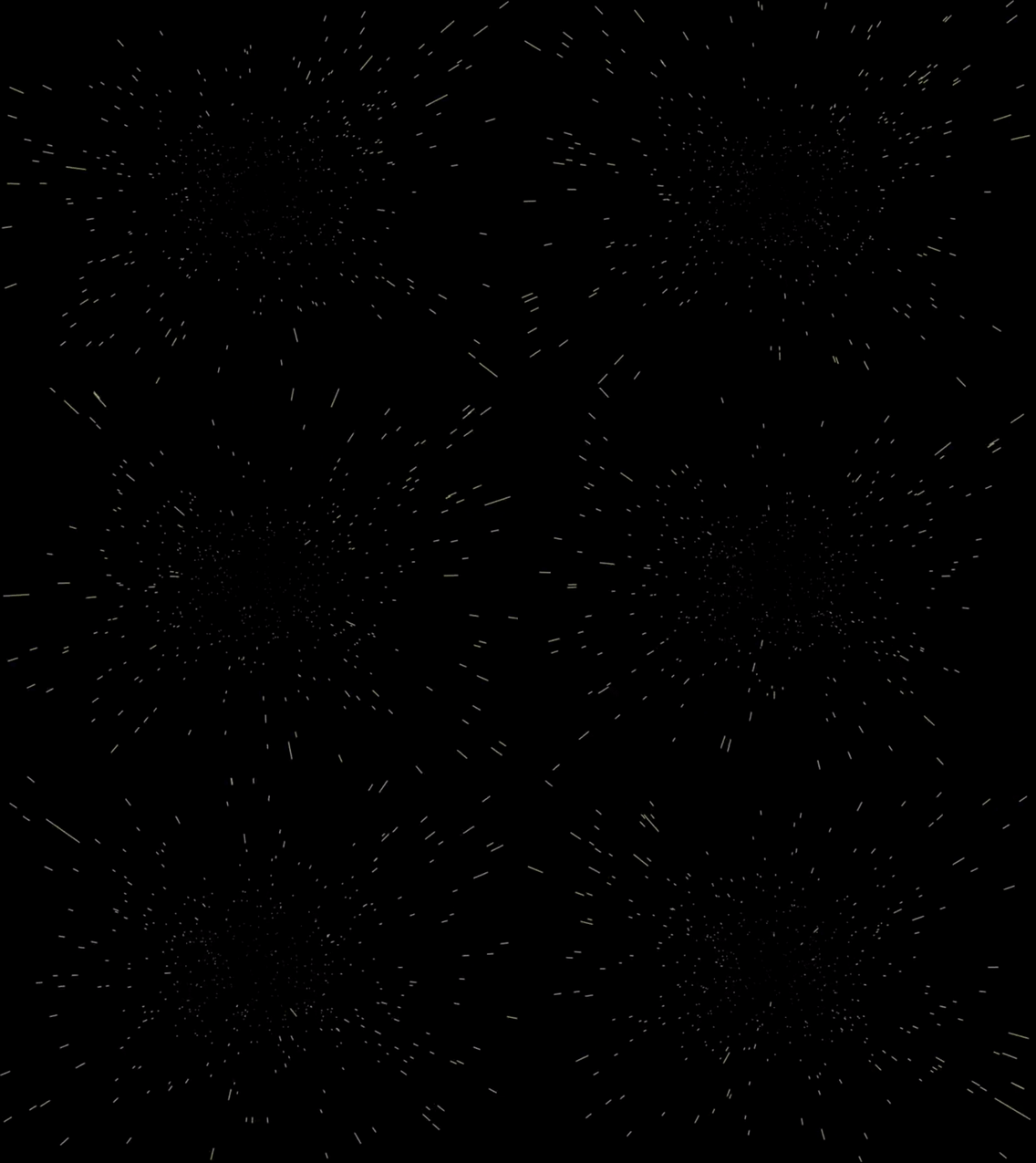
Screensaver is free to download. Checkout its repository.
There are costs though.
A side of me sank when I saw the project done without having put as much sweat in its development. While I'm fairly certain I could have written it myself, the path to learning macOS screensaver development never felt worth the detour. So it sat. For years.
AI didn't steal this one from me. I'd already let it go.
That leads me to a cautionary tale for developers: if there's a problem you're genuinely excited to solve, don't hand it to AI so quickly. Let it sit long enough to know whether the adventure to struggle is worth it to you.
An important skill of tomorrow's developers is knowing which problems to keep for themselves, and which ones to offload.
Discuss on HN.